Content on this page requires a newer version of Adobe Flash Player.

Get Adobe Flash player

Antique Haircombs
& Accessories


0560 278 4917

LogoText
 
 
Homepage
 
About Us
Online Store
Articles
Frequently Asked Questions
Background Information
Contact Us
 
Useful Links


Shopping Cart
 
Items:
Total:  
 
View Cart
 
Featured
 
Auguste Bonaz
Auguste Bonaz


ButterflyAntique Collection
Page:  [ 1 | 2 | 3 | 4 | 5 | 6 | 7 | 8 | 9 | 10 | 11 ]
 
Previous Page Background Information Next Page
 

Click image for gallery view

Pre-ban Genuine Ivory Floral Carved Comb

Ref: AN-0908-003

This very beautiful Victorian back comb is hand carved from one solid piece of genuine ivory in a pretty openwork floral design. It was probably made in the Asia or China for the Western market and imported into Europe.

My guess from the character of the design is that it was carved in India. After Queen Victorian became Empress on India in the late 1870s many items of jewellery and personal adornment were imported into Britain.

Ivory was one of the favourites and its popularity lasted well into the 20th century.

Size: 4½ x 4½ ins (approx 11 x 11 cms)

£125.00

View CartAdd to Cart
Top of Page

Click image for gallery view

Faux Tortoiseshell Openwork Border Comb

Ref: AN-0902-004

This handsome comb is made from celluloid faux tortoiseshell and has a high wedge shaped heading with a plain central panel. This is surrounded by an openwork border of scrollwork, giving it an attractive scalloped profile. By this period genuine tortoiseshell was becoming expensive and most hair ornaments which appear to be made of tortoise are, in fact, made from synthetics. 

This ornament is of the type known as a Spanish or mantilla comb because it resembles the traditional ornaments worn by Spanish ladies with their native dress. The production of the opera Carmen led to a fashion for high Spanish combs in the 1870s, and this one probably dates from that period.

Such combs were placed so that they were visible from every angle as in the final picture which is taken from a contemporary late Victorian cabinet photograph.

Size: 6¼ x 4 ins (approx 16 x 11 cms)

£40.00

View CartAdd to Cart
Top of Page

Click image for gallery view

Pre Ban Tortoiseshell Mantilla Style Comb

Ref: AN-0902-005

This comb is of the type known as a Spanish or mantilla comb because it resembles the traditional ornaments worn by Spanish ladies with their native dress.

The production of the opera Carmen led to a fashion for high Spanish combs in the 1870s, and this one probably dates from that period. It is made from one large solid piece of natural shell which is highly polished and beautifully mottled and translucent in parts. It has a symmetrical radiating design in which the natural colouring of the material has been very effectively used by the artist.

Such high topped combs were placed so that they were visible from every angle as in the final picture which is taken from a contemporary late Victorian cabinet photograph. The sitter has a very elaborate hairstyle which is typical of the period.

Size: 8 x 5 ins (approx 20 x 12.5 cms)

£80.00

View CartAdd to Cart
Top of Page

Click image for gallery view

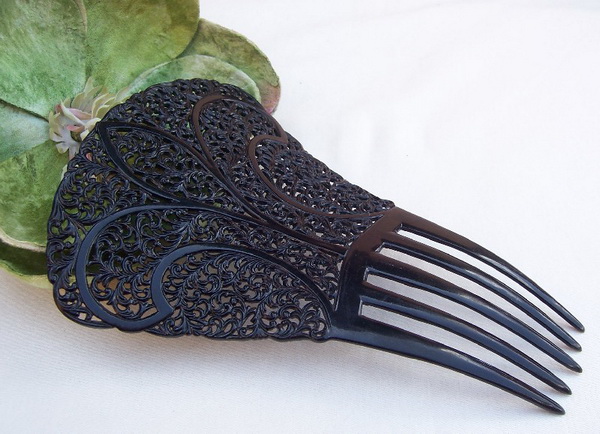
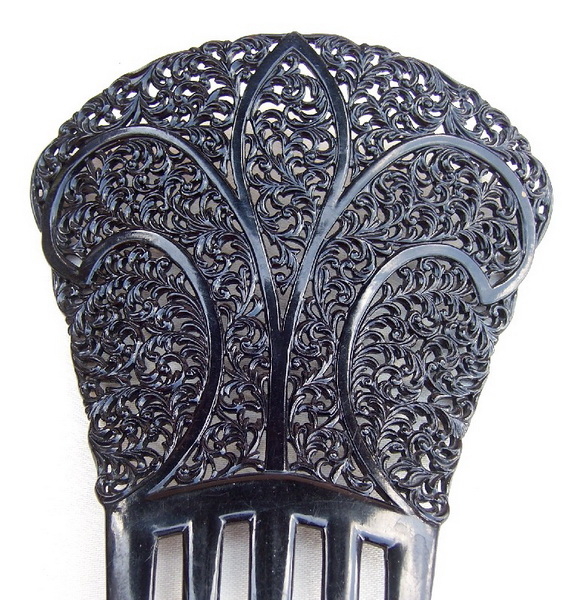
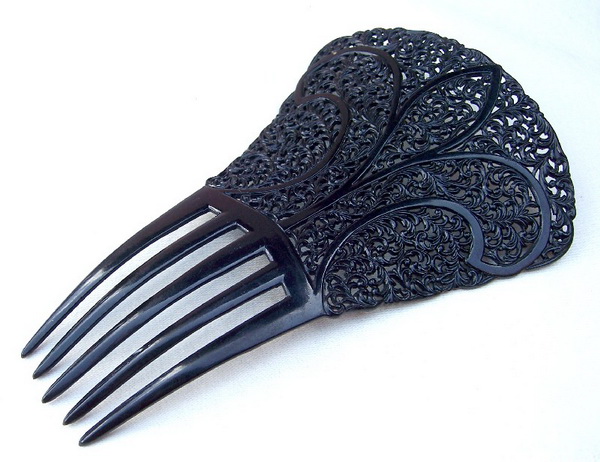
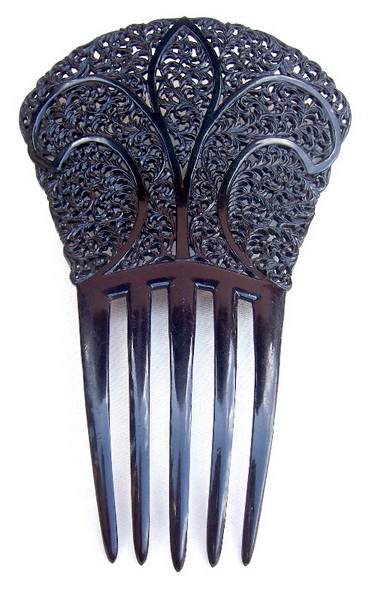
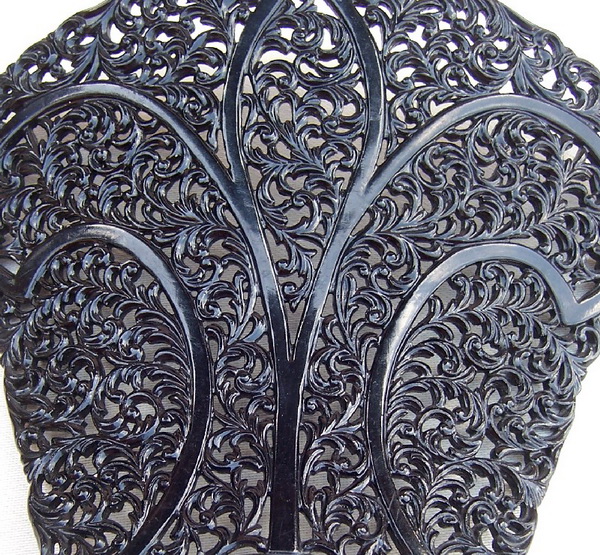
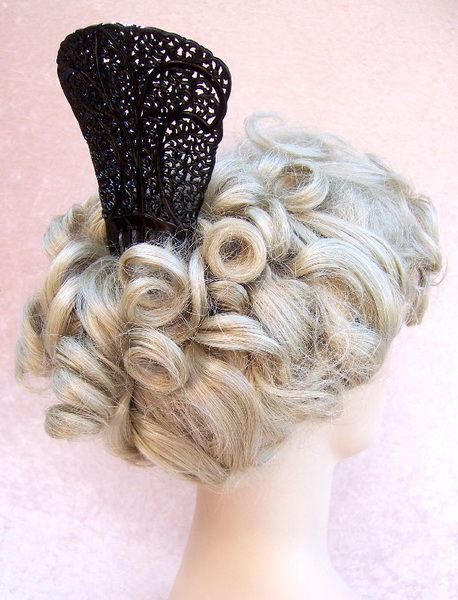
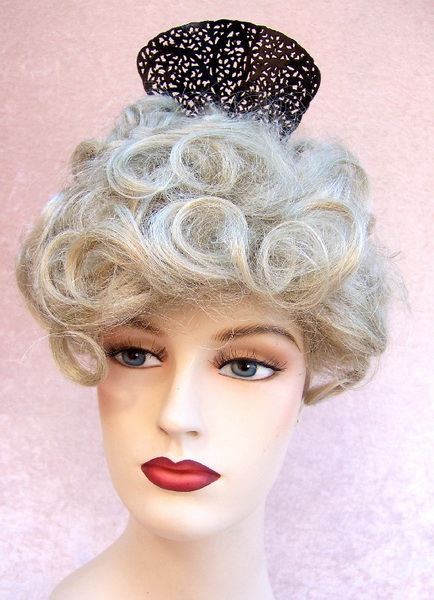
Black Fleur De Lys Mantilla Style Comb

Ref: AN-0909-007

This high topped black celluloid comb is of the type known as a Spanish or mantilla comb because it resembles the traditional ornaments worn by Spanish ladies with their native dress. It has a high heading adorned with a fleur de Lys motif set against open scrollwork. There was a fashion for combs of this type in the late 1870s after the debut of the opera Carmen and the style lasted until the end of the century in various guises. It was may have been worn for mourning.

Victorian etiquette was very strict and decreed that in deep mourning only dull dark materials like Whitby jet were allowed. However other dark materials such as black celluloid were often used as substitutes.

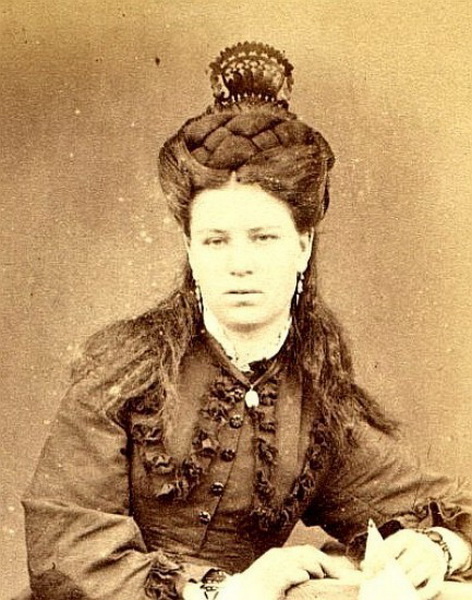
The final illustration is from a contemporary cabinet photograph and shows a Victorian lady from the 1870s wearing a tall pierced comb with her extremely elaborate hairstyle.

Size: 7¾ x 5½ ins (approx 19.5 x 14 cms)

£55.00

View CartAdd to Cart
Top of Page

Click image for gallery view

Victorian Asymmetric French Jet Mourning Comb

Ref: AN-1008-029

This handsome mantilla style comb is made from black celluloid with an attractive asymmetric design resembling fern fronds. It is further embellished with black rhinestones made from a substance called French jet. There is 1 black rhinestone absent.

It was probably worn for mourning. Victorian etiquette was strict and decreed that in deep mourning, the widow and close relative of the deceased must dress in plain dark garments. This mourning dress is illustrated in the final picture. Only ornaments of dull dark materials like Whitby jet were allowed and this was the material of choice.

When the supply of genuine Whitby jet began to fail various substances including black celluloid and the black glass called French jet were made into mourning jewellery. The combs were placed so as to be visible from all angles, as shown by the other picture which comes from a contemporary Victorian cabinet photograph.

Size: 7 x 3 ins (approx 18 x 7.5 cms)

£55.00

View CartAdd to Cart
Top of Page

Click image for gallery view

Late 19th Century French Ivory Hair Comb

Ref: AN-1008-030

This beautiful ornament is made from an early celluloid substance, popularly known as French ivory, because it was invented to substitute for the much more expensive elephant ivory which was becoming rare and expensive by the early 20th century. It is made in the distinctive Art Nouveau  to Art Deco transitional style of the early 20th century.

The ornament is given a very unusual and distinctive appearance by the use of two upward soaring wings. These are decorated with an engraved design and filled in with black pigment. Hair accessories of this period often appear in such whimsical shapes. The final picture dates from the 1890s and shows a sitter with a similar comb resembling a pair of wings. Such combs were placed so that they were visible from every angle to show the beautiful heading and any decorative treatment to full advantage.

Size: 6 x 4½  ins (approx 15 x 10.5 cms)

£45.00

View CartAdd to Cart
Top of Page

Click image for gallery view

Dyed Horn Carved and Pierced Mantilla Style Comb

Ref: AN-1110-013

This is a tall tortoiseshell effect comb made from natural horn and dating from the 1870s or 1880s. It has a stand up heading of the type which was generally known as a mantilla comb after the very tall combs which are worn by Spanish ladies with their native dress. This one has the usual curved profile and a pretty openwork design in which solid panels alternate with scrollwork. The final two pictures show typical combs and hairstyles of the period. One is taken from a contemporary photograph and the other a fashion engraving in a hairdressing magazine.

Horn was one of the most popular materials for comb making because of the ease with which it could be dyed, carved and moulded. It was always cheaper than tortoiseshell, and was often treated to imitate the distinctive tortoise pattern of the more expensive material. This example has been painted with various dyes and chemicals to achieve the mid and yellowish brown stain which approximates the lighter form of natural shell.

Size: 5½ x 4½ ins (approx 14 x 11 cms) 

£70.00

View CartAdd to Cart
Top of Page

Click image for gallery view

Mid Victorian Silver Filigree Mantilla Style Comb

Ref: AN-1110-014

This tall silver filigree hair comb has a stand up heading of the type which was generally known as a mantilla comb. This resembled the very tall combs which are worn by Spanish ladies with their native dress. There was a fashion for combs of this type in the late 1870s after the debut of the opera “Carmen” and the style lasted until the end of the century in various guises.

The comb has an attractive scalloped profile and a lacelike design with small flower heads set against scrollwork, giving a three dimensional effect. The comb may have been imported from India. When Queen Victorian became Empress of India in the 1870s it began a vogue for oriental handicrafts. These items were not manufactured for the native population but were strictly export goods. We find these imported ornaments in a wide variety of materials and styles, including carved ivory, tortoiseshell and filigree work. They are an interesting example of an era, and of how personal adornment was influenced by travel to other lands and cultures.

Size: 5¼ x 4½ ins (approx 13.4 x 11 cms) 

£120.00

View CartAdd to Cart
Top of Page

Click image for gallery view

Early 19th Century Pressed Horn Hair Comb

Ref: AN-1110-015

This is an excellent example of a fine early 19th century horn comb which probably dates from the period 1820s to 1840s. The horn has an attractive scalloped profile and has been left in its natural colouring. The design of a formalised lotus with scrolling leaves has been pressed into the heading and then further elaborated by engraved handwork.

In the first part of the 19th century, the making of combs was still a handicraft, and many combs were made in small local manufactories.  Horn was one of the most popular materials for hair combs in the 19th century, not only because the material was cheap, but also because it could be easily treated to obtain a number of decorative effects. For an item which is approaching 200 years old the comb is in fine condition with all its prongs intact and nicely pointed. The only minor issue is a small nibble at the upper right of the heading.

This manner of wearing such a large decorative comb is shown in the final two pictures. These are taken from contemporary 19th century portraits of a beautiful young ladies dressed in the mode of the 1830s. Their elaborate hairstyles are dressed in ringlets and they have beautifully mottled tortoiseshell or horn combs set at a jaunty angle at the back of the head.

Size: 5½ x 7 ins (approx 14 x 18 cms) 

£130.00

View CartAdd to Cart
Top of Page

Click image for gallery view

Art Nouveau French Ivory Back Comb

Ref: AN-1110-016

This beautiful ornament is made from an early celluloid substance, popularly known as French ivory, because it was invented to substitute for the much more expensive elephant ivory which was becoming rare and expensive by the early 20th century.

The comb is decorated in the Art Nouveau style which is distinguished by complex interlaced lines, naturalistic or organic motifs, and by the use of cabochon rather than facet cut stones. Here we see three pink glass cabochon stones set in a framework of gilt metal. One characteristic feature is the so-called whiplash effect of curved and interlaced lines, which is featured here on the wide openwork heading.

This is a nice quality hair comb dating from the late Victorian or Edwardian period of circa 1890 to 1910. It is of the type called a back comb being deeply curved to fit the back of the skull and to support the elaborate padded hairstyles and immense hats of the period. Such combs are illustrated in the final picture dated 1895 which shows a rear view of the modish hairdressing and the manner in which such combs were made to support it.

Size: 2¾ x 4 ins (approx 7 x 10 cms) 

£60.00

View CartAdd to Cart
Top of Page
 
Previous Page Store IndexNext Page
 
Powered by Miter

Cards Accepted
©2012 Copyright Simitra's Exquisite Things

e-commerce price conversion