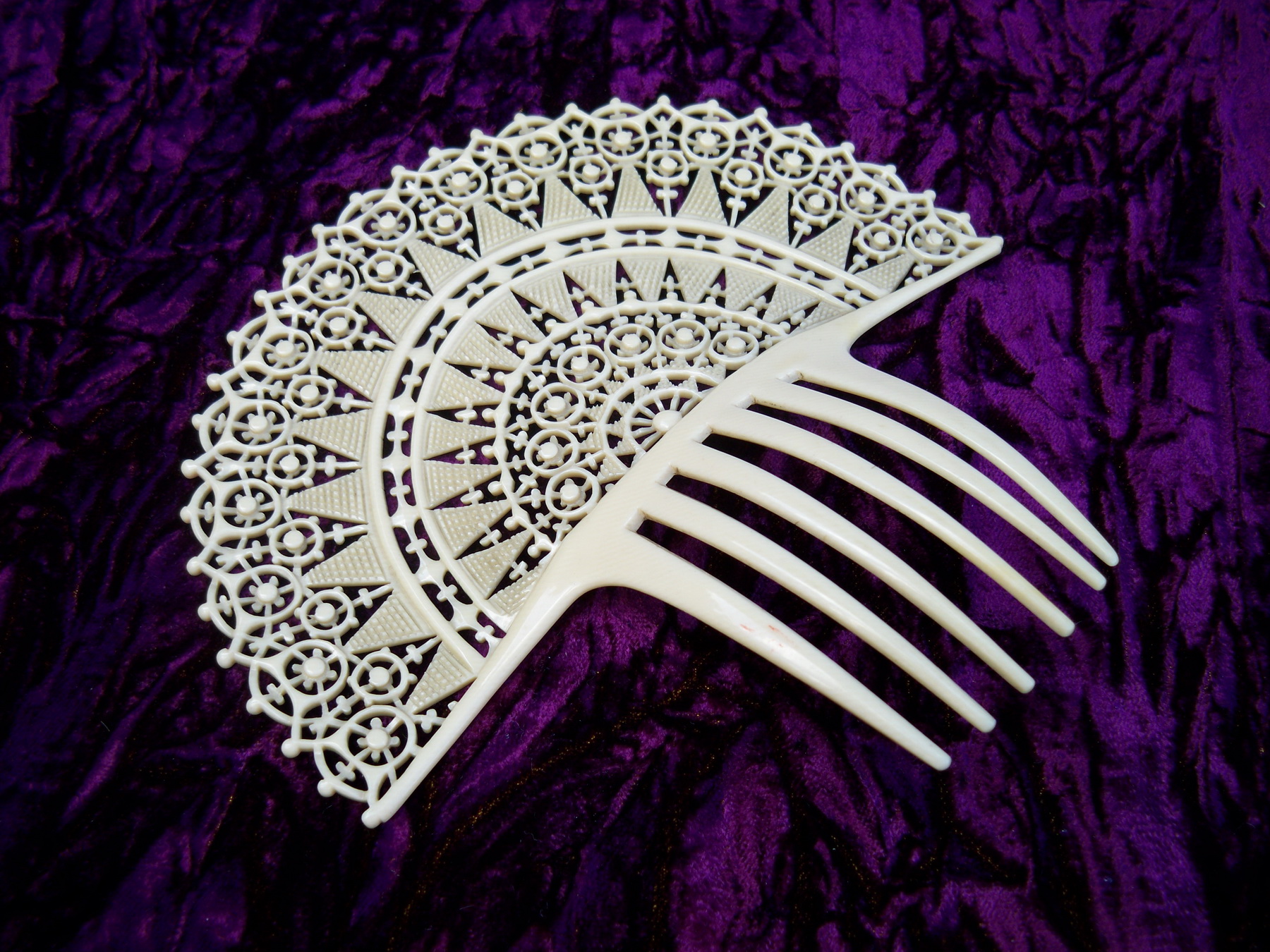
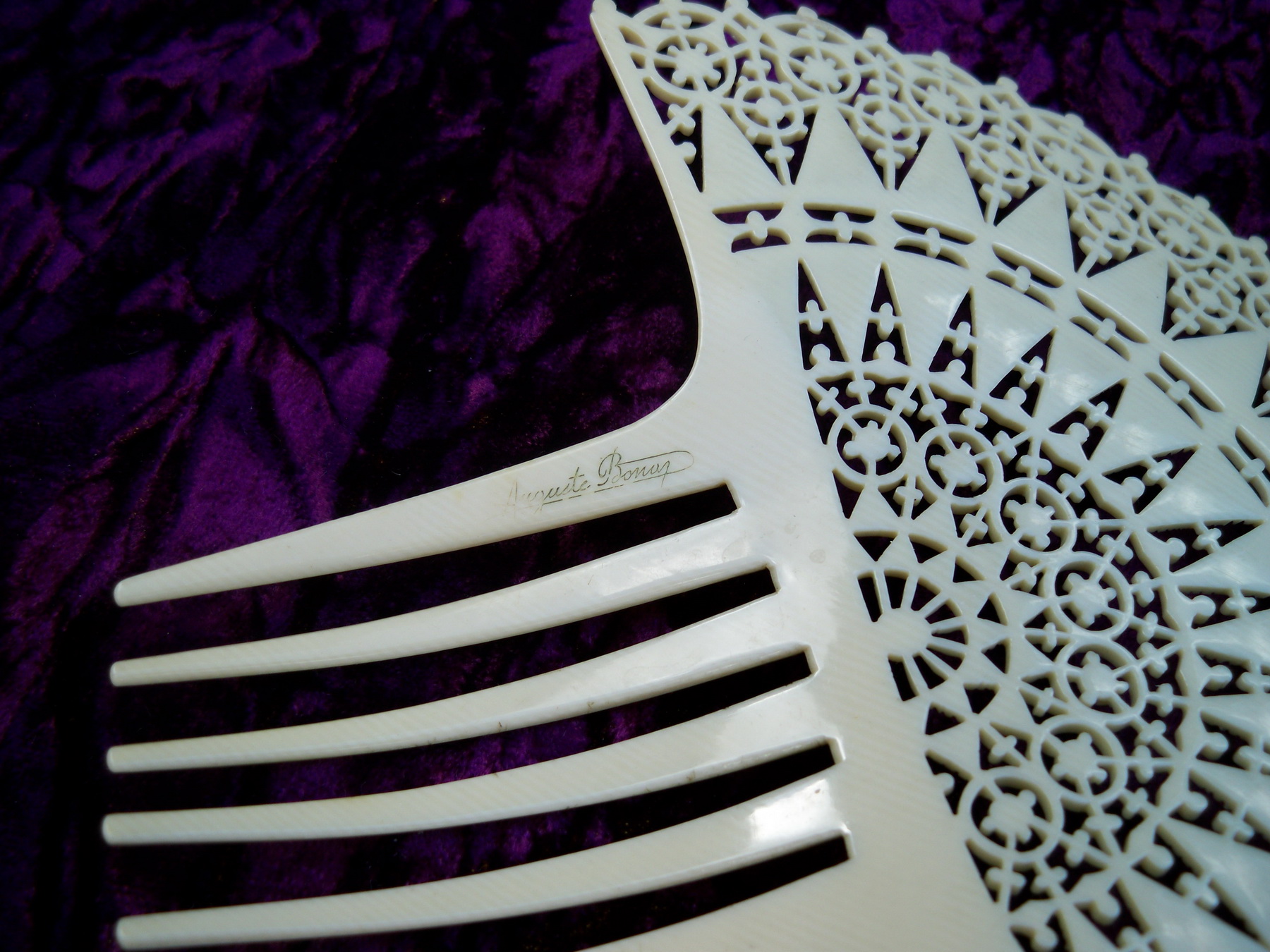
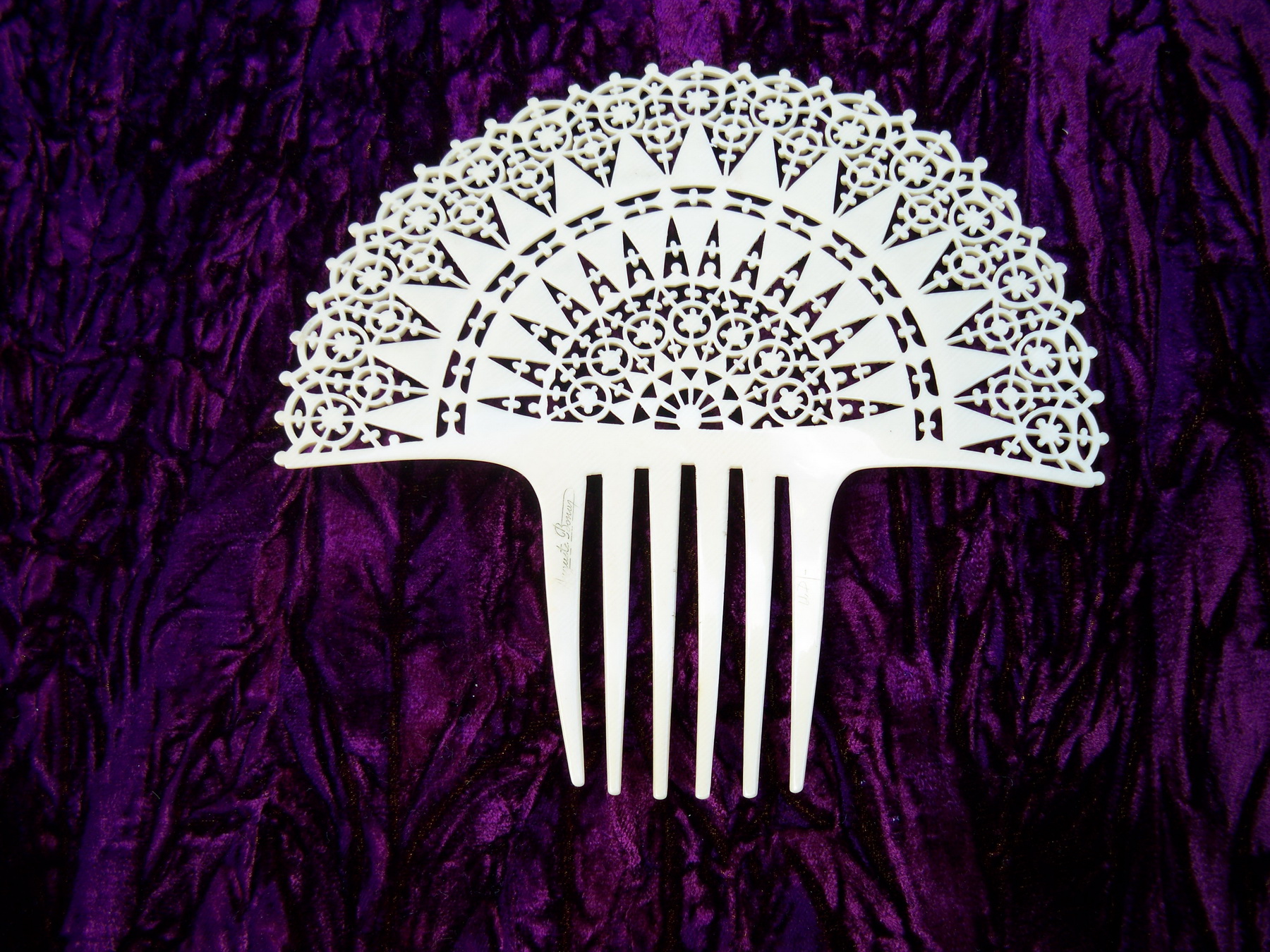
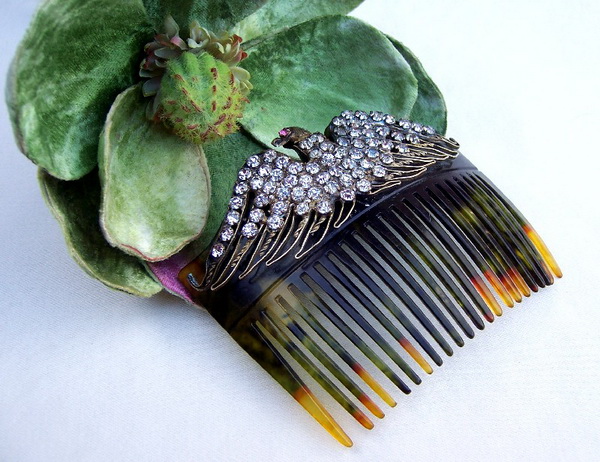
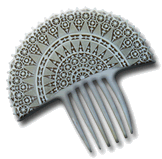
 This magnificent French ivory hair comb is an example of the kinds of high quality ornaments for which Maison Auguste Bonaz was famous. This designer is known as the comb maker par excellence of the Art Deco period. This magnificent French ivory hair comb is an example of the kinds of high quality ornaments for which Maison Auguste Bonaz was famous. This designer is known as the comb maker par excellence of the Art Deco period.
Art Deco was a design medium whereby artist craftspeople of the period explored the
potential of new synthetic materials and methods of mechanical (as opposed to hand made) production. Deco was essentially an eclectic style. A diversity of historic and cultural sources contributed to its unique identity. It also employed the latest industrial materials and techniques combined with new materials such as Bakelite and Galalith. It was this fusion of luxury and modernity that gave Art Deco its unique character.
One of the features of the new style was that various kinds of synthetic were first employed as decorative forms in their own right, and in ways which celebrated their versatility. Maison Bonaz was renowned for its use of these new materials, and for exploring their versatility in novel decorative forms. In retrospect we see that the work of House Bonaz was well in advance of its time.
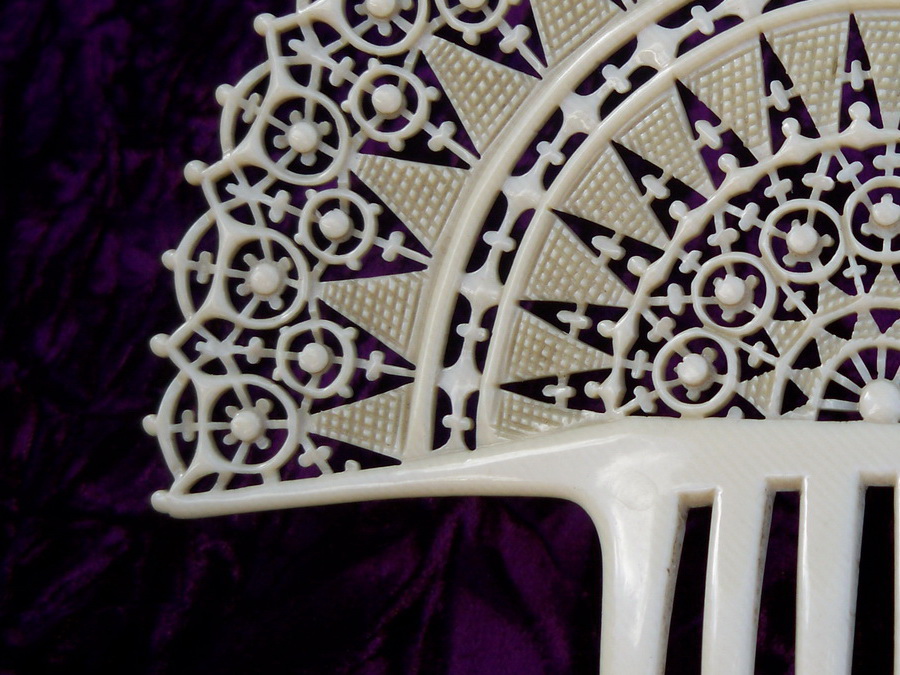
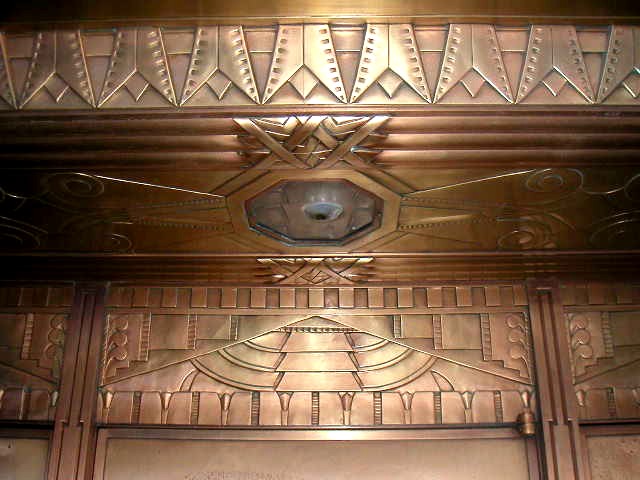
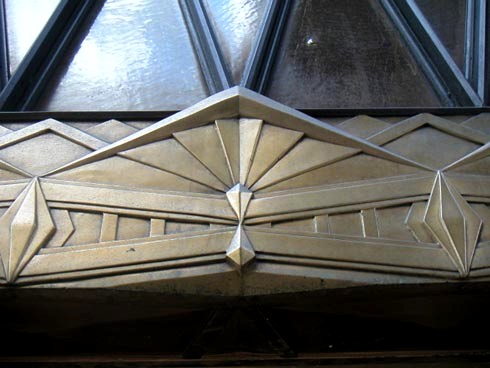
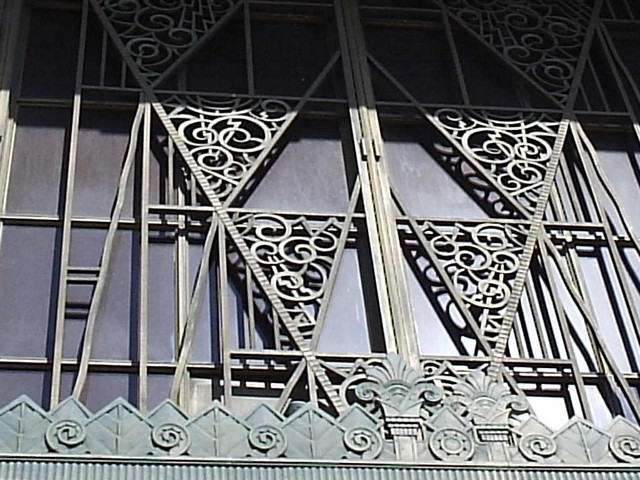
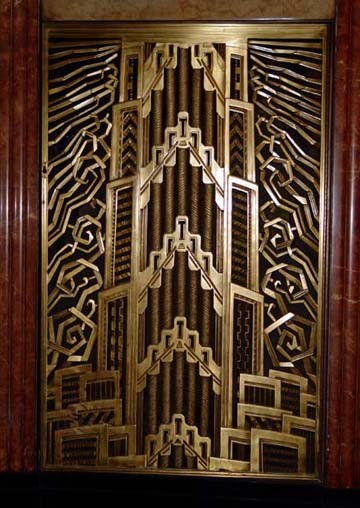
Art Deco comb designs incorporated elements of Cubist and Futurist art. Jazzy and geometric, the designs of the 1920s celebrated all the excitement of the machine age and were angular, formalised and bold. Many of the most popular motifs found in Art Deco designs were starbursts, chevrons, circles and half circles, triangles, crosshatching, and formalised flowers. All these can be discerned by a careful examination of this wonderful comb.
Art Deco truly reflected the spirit of the early twentieth century, expressing excitement over technological advancements, high speed transportation, and innovative new construction techniques. Motifs used in these designs frequently incorporate icons of speed, technology and the love of the machine.
When we study the design of many of the decorative hair combs produced in this period we see various manifestations of a species of ornamentation known variously as the spokes, palm or sunray. The motif was an archetypal Art Deco one, and appears as a series of lines or panels which radiate out from the base of the heading where it meets the tines. In this example we see several borders of acute triangles (one reversed) which radiate out like the rays of the sun. This kind of design has various interpretations.
Before the end of the 19th century, the upper classes had carefully avoided a tan, which was snobbishly associated with the lower social classes who did manual labour and worked outdoors. With the growth of interest in the benefits of sport and exercise, sun-bathing became something of a fetish with many younger people in the 1920s. This sunray design is believed to symbolise the popular devotion to acquiring a healthy looking tan.
Another source was associated with that of the designs of ancient Egypt, given fresh impetus by the discovery of the tomb of Tutankhamen in 1923. This event led to the use of all kinds of pseudo Egyptian motifs in the decorative arts. Triangles are found in Egyptian jewellery and tomb paintings, together with the kinds of cross hatched designs which adorn the triangular motifs in this lovely comb. Here they are presented against a background of intricate pierced work, which softens their geometric quality and blurs the impression of speed and movement.
This background is of great delicacy, reminiscent of the kind of pierced moucharabia work seen in Middle Eastern furniture and window decorations. Moucharabia is a traditional form of window decoration which allowed the women of the harem to look out into the street but to remain unobserved. This Middle Eastern or Arabian influence was another important element in Art Deco design and is often combined, as here, with the foregoing pseudo Egyptian motifs.
From an examination of this artefact we can therefore appreciate that Art Deco was very much more than simply a “geometric” style, which employed metals, plastics and mass production. On the contrary, it is a complex and highly sophisticated design movement in which many different contributory influences were melded and intertwined.
|